CTTC · NR UE technology for NTN
Build the next
NTN breakthrough.
Lunaris is a configurable C++20 5G NR user equipment platform. Turn a research idea into an instrumented experiment, an interoperability campaign, or a focused pilot—with the team developing the technology.
RELEASE 17 BASELINE / FR1 PAIRED FDD / TERRESTRIAL + NTN
NTN capabilities at a glance
NTN features,
built into the UE.
From satellite assistance to the scheduled uplink, Lunaris brings the key NTN mechanisms into an observable research stack. These capabilities support focused Release 17 FR1/FDD experiments alongside real IP traffic.
01 / ASSISTANCE
Satellite assistance & SIB19
- SIB19 acquisition, updates, epoch and validity handling.
- Common timing advance and drift, cell-specific Koffset and kmac.
- Satellite position/velocity and orbital-element assistance.
02 / GEOMETRY
Orbit & UE geometry
- Fixed UE location in ECEF or WGS84 coordinates.
- Orbital-element conversion and satellite-state propagation.
- Reference checks for rotating-ECEF gravity/J2 propagation.
03 / TIMING
NTN timing & uplink alignment
- Geometric, common and residual timing-advance processing.
- Long-delay scheduling offsets and SFN-wrap handling.
- Retiming of PRACH, PUSCH, PUCCH and SRS transmissions.
- Absolute/relative timing advance and alignment timers.
04 / FREQUENCY
Doppler prediction & compensation
- Range-rate Doppler prediction on the paired uplink carrier.
- Phase-continuous uplink compensation across bursts and refreshed ephemeris.
- Separate oscillator/CFO tracking and NTN-assisted cell-search priors with nominal-search fallback.
05 / ACCESS
Long-RTT access & HARQ
- Long-RTT procedure timers and per-process HARQ feedback configuration.
- Four-step random access, Msg3 repetition and contention resolution.
- Two-step random access with MsgA/MsgB success and fallback to Msg3.
- Uplink/downlink repetitions, HARQ combining and configured-grant mechanisms within supported profiles.
06 / CONTROL
Assistance lifecycle & observability
- T430 and time-alignment expiry handling.
- Cancellation of queued uplink transmissions and gating when assistance expires; recovery with fresh assistance.
- Live assistance age/validity, Doppler, timing-advance and uplink-gate diagnostics.
- Controlled delay/Doppler experiments, ZMQ impairments and IQ capture/replay.
Support is configuration-dependent. Selected terrestrial and static GEO-delay-emulated RF profiles are demonstrated; moving-orbit channel validation and live satellite operation remain separate milestones. Access, repetition and configured-grant qualification varies by peer and profile.
From research to a partner programme
Your next experiment deserves
a UE you can shape.
Satellite and terrestrial networks are evolving faster than closed device roadmaps. Lunaris gives research teams a configurable endpoint with visibility from radio samples to IP traffic—and a development path for the behaviour your programme needs.
01 / CONTROL
Make the UE part of your experiment.
Explore access procedures, scheduling, repetition, configured grants and NTN assistance with an integrated PHY-to-IP research stack.
02 / VISIBILITY
Understand why a link works.
Inspect timing, Doppler, decoding, HARQ and protocol state through structured logs, bounded captures and a live terminal dashboard.
03 / EVIDENCE
Build a case your partners can assess.
Combine automated checks with independently observed gNB, core and packet evidence. Set explicit acceptance criteria for a paid pilot.
A concrete starting point
Lab results. Clearly scoped.
OCUDU · RF
20 accepted trials
400/400 traffic probes across selected terrestrial and GEO-delay-emulated profiles, including candidate and post-deployment smoke trials. Single-chain X410, 5 MHz, 15 kHz SCS. Documented 25 October 2026.
AMARISOFT · ZMQ
Access + IP traffic
Selected licensed Amarisoft interoperability campaigns cover registration, traffic and Msg3 repetition, with grant, CRC and procedure audits. These are software-radio ZMQ results.
AUTOMATION · FOUR TIERS
Repeatable checks
Unit, specification-reference, IQ replay and synthetic integration checks complement live campaigns. Missing optional fixtures are reported separately.
Read the validation scope and results →
Selected lab profiles establish a starting point for collaboration. They do not establish universal interoperability, certified RF performance or a live satellite service.
What you can build
A platform for questions
that matter.
NTN RESEARCH
Close the assistance-to-uplink loop.
Investigate SIB19, ephemeris, timing advance, Doppler compensation and long-delay access with observable procedure behaviour.
NETWORK INTEGRATION
Exercise the other end of the gNB.
Build focused interoperability campaigns for access, repetitions, grants, bearers and user traffic across agreed network profiles.
REPRODUCIBLE EXPERIMENTS
Move between IQ, ZMQ and RF.
Use recorded samples, controlled software links and timestamped SDR operation to isolate issues and repeat an experiment.
FUNDED DEVELOPMENT
Advance the feature your project needs.
Sponsor a bounded work package with an agreed profile, success criteria, review points and an evidence report.
Built within the CTTC research environment
Software ambition.
Physical infrastructure.
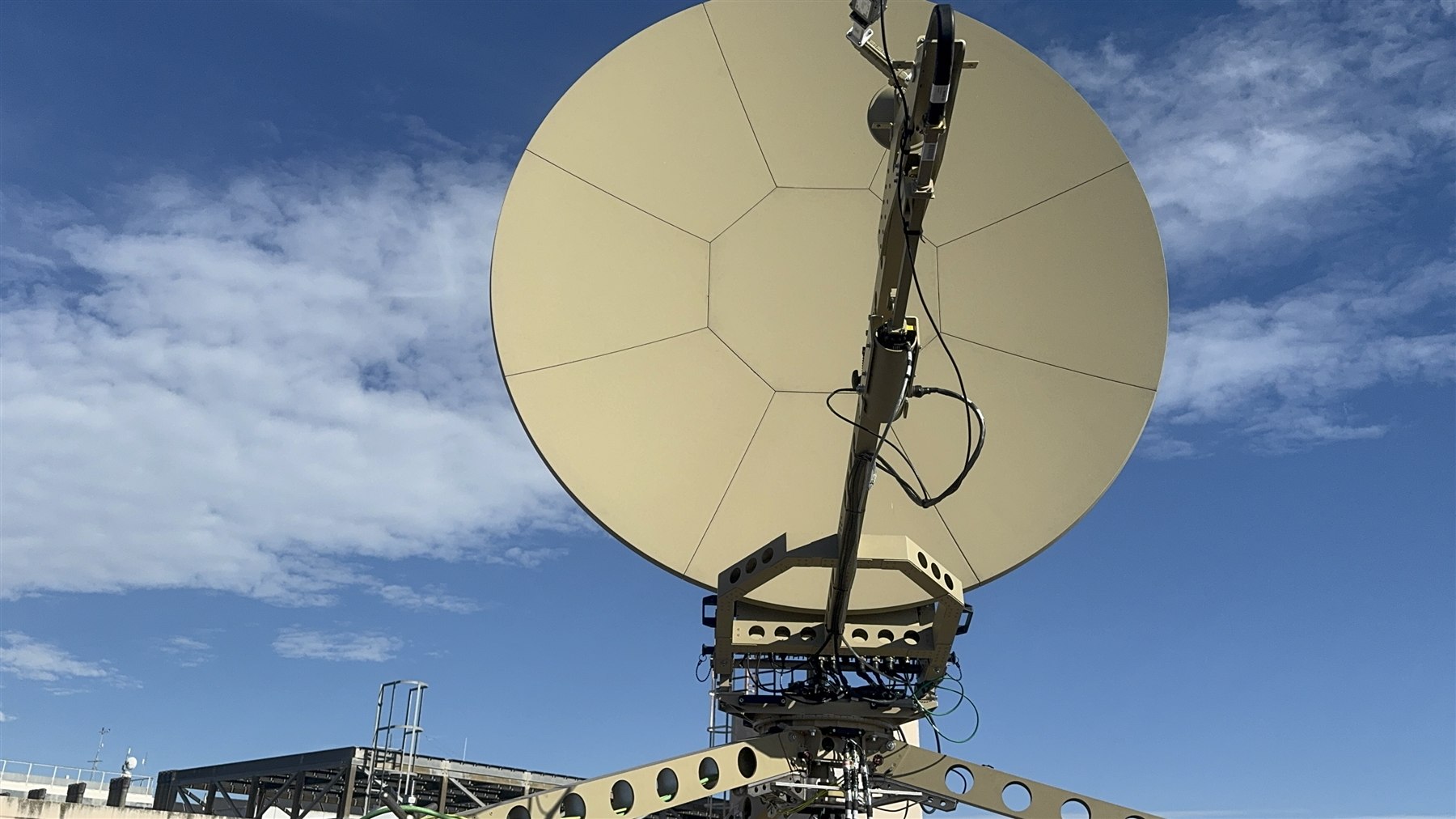
Lunaris connects to the CASTLE and SpaceLab ecosystem: software-defined radios, signal-processing servers, satellite research facilities and channel-emulation infrastructure. A project can combine UE development with a tailored lab campaign.
Selected Lunaris RF evidence uses a USRP X410. Availability of other facility equipment is distinct from qualification of a Lunaris configuration.
Explore the technology →Partner with Lunaris
Fund a milestone.
Create a capability.
We are seeking industrial partners, research programmes and funders for paid pilots, sponsored R&D and integration work. Bring a technical objective; together we define a credible, measurable route to it.
PAID PILOT
Prove your use case.
A bounded end-to-end demonstration against an agreed gNB, radio and channel profile.
SPONSORED R&D
Advance a capability.
Target moving-orbit validation, broader interoperability, radio integration or a specific protocol feature.
TECHNOLOGY ACCESS
Discuss an engagement.
Explore evaluation, integration support and licensing options. Access and commercial terms are agreed individually.